
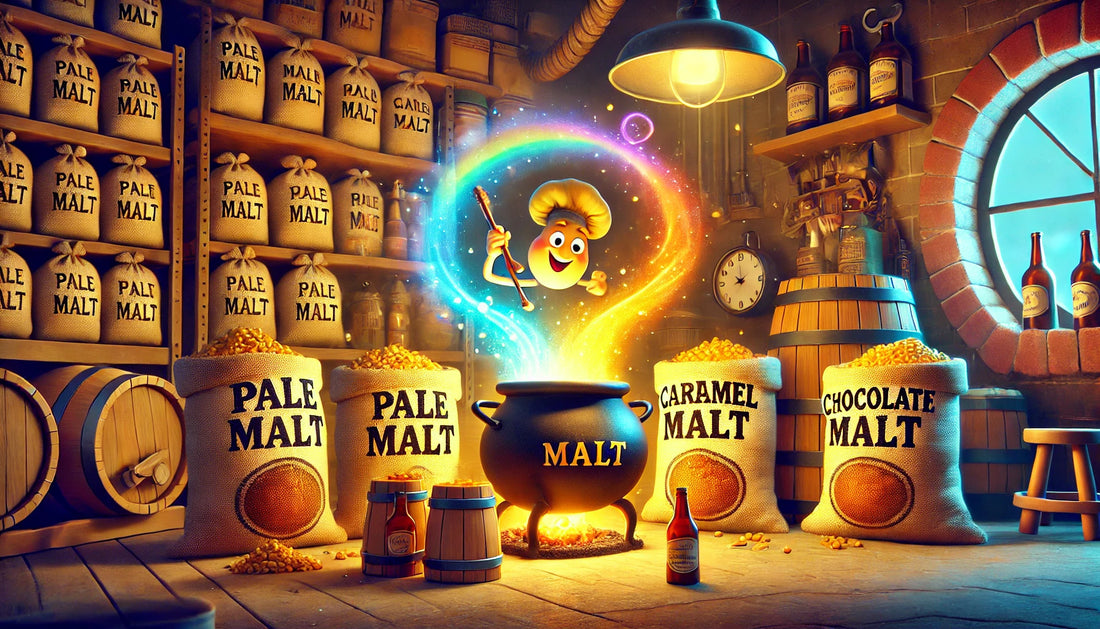
Homebrew ingredients, what hops, malts and yeast actually do

Most people brewing at home follow the kit instructions for the first few batches, which is exactly right, and then they get to the point of wanting the beer to taste like something in particular and have no idea which lever to pull. So this is what each of the four ingredients is actually doing, because once you know that, changing one of them stops being a guess.
Hops do the bitterness and the smell
Hops are carrying two jobs at once. Boiled early they give you bitterness, and added late or after the boil they give you aroma, which is why the same hop can taste like two different things depending on when it goes in.
The ones we keep on the shelf, and what they are good for:
- Citra. Heavy citrus and tropical fruit. The one people reach for when they want a juicy IPA.
- Galaxy. Australian, and it leans passionfruit and peach. Works well late in the boil.
- Nelson Sauvin. A New Zealand hop with a white wine character that people either love or find odd.
- Chinook. Piney and resinous. Good in a darker ale where you want the bitterness to have some grip.
- Centennial and Cascade. The classic American pair, grapefruit and floral, and they are forgiving.
- Fuggles, Kent Golding and Hersbrucker. The gentler English and German end, earthy and herbal rather than fruity, and the right choice for a bitter or a lager.
Malt does the body, the colour and the sweetness
Malt is where the fermentable sugar comes from, so it sets the alcohol, and it is also doing all the work on colour and on mouthfeel. A beer that tastes thin is usually a malt problem rather than a hop problem.
- Light malt extract. The base for most beers, and it gives you a clean, gently sweet backbone.
- Amber and crystal malt. Caramel and toffee, and a deeper colour. A small amount changes a pale ale a lot.
- Dark malt. Roast, coffee and chocolate notes, for stouts and porters.
- Wheat malt. Adds body and head retention, and it is what gives a wheat beer its haze.
Yeast is doing more than you think
People treat yeast as the thing that turns sugar into alcohol and leave it there, and it is actually a big part of the flavour. Different strains throw different esters and phenols, so the same wort split between two yeasts comes out as two noticeably different beers.
- US05 Safale. Clean and neutral, so the malt and the hops do the talking. The safe choice for a pale ale or an IPA.
- S23 Saflager. For lagers, and it wants to ferment cold, so it needs somewhere that holds temperature.
- Morgans Premium Ale. A straightforward ale yeast that suits the Coopers kits.
Temperature matters as much as the strain. An ale yeast run too warm throws banana and solvent notes, and that is the single most common reason a first batch tastes off.
The things you add on top
Once the basics are behaving, this is where it gets interesting.
- Fruit. Mango, cherries, raspberries. Added after primary fermentation so you keep the aroma rather than blowing it off with the CO2.
- Spices. Coriander in a witbier, cinnamon in something dark for winter. Go lighter than you think.
- Honey. Ferments out almost completely, so it lifts the alcohol and leaves an aroma rather than sweetness. That surprises people.
Shop related products
- Thomas Coopers Brew A IPA 1.7kg. Built to take extra hops, so it is the one to experiment on.
- Coopers International Series Australian Pale Ale 1.7kg. A clean base that shows what a hop change does.
- Coopers Original Stout 1.7kg. The roast malt end of the range.
- Coopers International Mexica Cerveza 1.7kg. Light and crisp, for a warm afternoon.
Did you know we also stock the loose ingredients in store that are not on the website, including hop pellets in Galaxy, Nelson Sauvin, Citra, Chinook, Centennial, Fuggles, Kent Golding, Hersbrucker and Cascade, the Coopers light, dark, amber and wheat malt extracts, Gladfield medium crystal malted grain, and beer yeasts including US05 Safale, S23 Saflager and Morgans Premium Ale. Give us a ring on (08) 8536 4333 to check what is on the shelf.
What is listed online is in homebrew and Coopers.
Working out what to change
Brewhilder will talk through what you brewed and what you want different next time, which is a faster way at it than reading another article.
More on brewing
- Top 5 common homebrewing mistakes and how to fix them
- Why every homebrewer needs a decent fermenter
- Brewing on a budget, essential equipment that will not break the bank
I once put three times the hops I meant to into a batch and it turned out to be the best thing I have made, which taught me nothing useful at all.
Cheers,
Candeece