
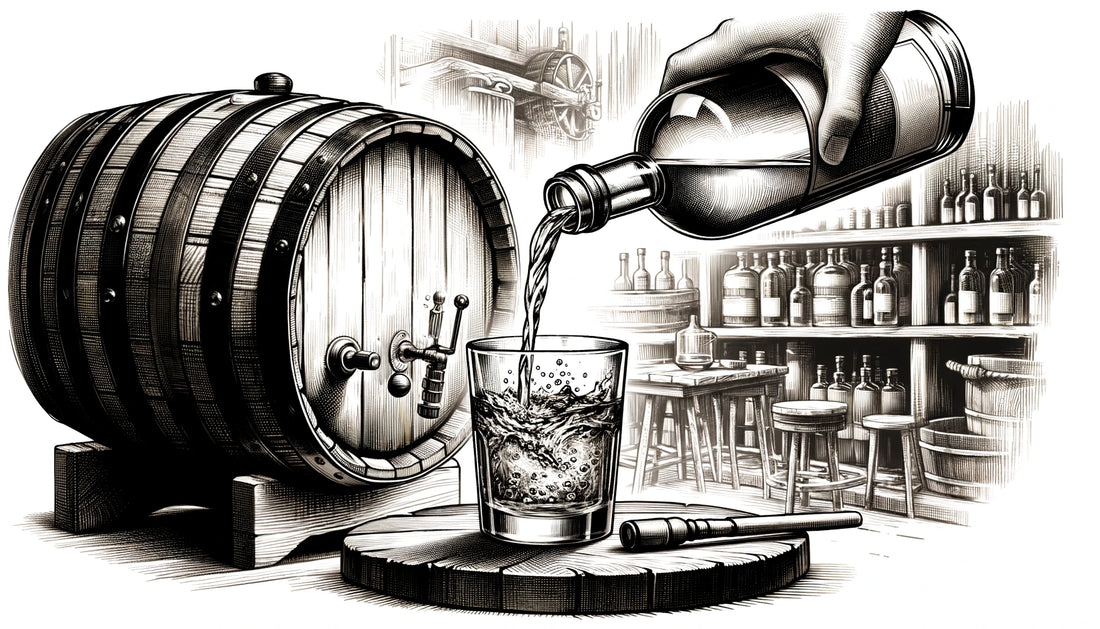
Making Spirits at Home with a Reflux Still: A Beginner's Guide
Share
Before anything else, the licence
Owning a still is legal in Australia. Actually distilling spirits is a different matter, because you need an excise manufacturer licence from the ATO to do it, and that applies whether you are selling the result or drinking it yourself. There is no home use exemption.
We are not going to pretend otherwise just because it would make for an easier article. Look it up on the ATO site, work out where you stand, and go from there. Everything below assumes you have sorted that out.
Worth saying that flavouring a purchased base spirit with essences is a completely different activity and none of this applies to it. Plenty of people go that way and get a very good result.
How a reflux still works
A reflux still runs the vapour back over itself through a packed column before it condenses, which strips it repeatedly on the way up. That is why a reflux still gives you a high purity neutral spirit, and it is also why it is the wrong tool if you want something with character left in it. For a neutral base you are going to flavour afterwards, it is exactly right.
The parts that matter are the boiler, the column, and the condenser. A copper condenser will pull sulphides out of the vapour and give you a smoother result than stainless will, which is the main reason people pay the difference.
Making the wash
The wash is the fermented liquid you distil. Four things go into it.
- Water. Clean and filtered. Whatever is in your water ends up concentrated in the result.
- Sugar. Plain white sugar for a neutral base. Brown sugar or molasses if you want some character carrying through.
- Yeast. A proper distiller's or turbo yeast, not bread yeast. It is bred to keep working at higher alcohol levels.
- Nutrients. A sugar wash has nothing in it for the yeast to live on, so unless your yeast comes with nutrient included you need to add it or the fermentation will stall.
The process
- Sanitise everything that touches the wash. Same rule as brewing and the same consequences if you skip it.
- Heat some of the water and dissolve the sugar into it properly.
- Cool it to about 25 degrees, then get it into the fermenter.
- Top up to volume with the rest of the water, usually about 23 litres.
- Yeast and nutrient in, stir it through.
- Seal it, fit the airlock, and hold it somewhere steady between 18 and 25 degrees. It will take anywhere from a few days to over a week.
Let it clear before you distil. Sediment carried into the boiler scorches and you will taste it.
The run
Assemble the still to the manufacturer's instructions, check every connection, and make sure it is clean. Then fill the boiler with the cleared wash, leaving the sediment behind.
The part that actually matters is the cuts.
- Foreshots. The first of what comes off. Discard it. This is where the methanol and the other things you do not want are concentrated, and this is not a step to get creative with.
- Heads. Sharp on the nose and harsh to taste. Set aside or redistil.
- Hearts. What you are here for. Clean, smooth, and this is the fraction you keep.
- Tails. Comes in heavy and oily at the end and it will ruin the hearts if you let it run in. Set aside for the next run.
Never leave a still running unattended. It is hot, it is under pressure, and what is coming out of it is flammable.
Flavouring afterwards
A neutral spirit is a starting point rather than a finish.
- Essences. Still Spirits and Edwards both do a wide range and they go straight into the spirit. Easiest route and the results are better than people expect.
- Oak. Chips or a cask for anything heading towards a whisky or a rum. Slow, and it is where the character comes from.
- Your own. Fruit, herbs, botanicals. Gin is the obvious one to start experimenting with because the botanicals do all the work.
Come and have a chat
We stock the conditioner, the carbon, the turbo yeast and a long wall of essences at the shop. A fair bit of the homebrew range is in store rather than online, so if you cannot see it on the website give us a ring and we will tell you what is on the shelf.
If you are working out whether a reflux still is even the right machine for what you want to make, come in and tell us what you are after, because the answer is sometimes no and it is cheaper to find that out first.
Shop related products
- Still Spirits Distilling Conditioner 50ml. Goes into the wash before you run it.
- Still Spirits Turbo Yeast. Built to keep fermenting at higher alcohol levels.
- Still Spirits Air Still Carbon Pack 10. Carbon filtering for a cleaner neutral spirit.
There is a lot more in the Still Spirits range, the spirits section and the Edwards Essences, most of which sits in the shop rather than online.
Stuck on something?
Brewhilder is our homebrew adviser and it will talk you through a wash or a cut any time of the day. Have a go here.
Read next
Patience and a clean setup will get you further than any amount of expensive gear, which is a bit annoying when the expensive gear is so much more fun to look at.
Cheers,
Candeece